Listen and locate
We map the painful area, tender Ashi points, movement limits, and the channel pathway connected with the pain.
Pain / ACC care
Most pain that returns isn't only about the sore spot — it's about the pattern feeding it. We look at the local tissue, the channel it sits on, your injury history, and how your body's been coping, so treatment addresses both.
Inside your treatment
We do not use one fixed protocol. Your plan is shaped by the symptom, the pattern underneath it, your sensitivity, and how your body responds between visits.
We map the painful area, tender Ashi points, movement limits, and the channel pathway connected with the pain.
For deeper or stubborn tension, we often layer treatments in the same visit — needles placed first, then cupping or electro-stimulation added on top. You'll feel firm suction or a gentle pulsing, not pain.
If the tissue is inflamed, cold, depleted, or slow to recover, we adjust the approach — sometimes adding heat, sometimes easing off — to support the body's own repair capacity, not just quiet the symptom.
We reassess pain, range of motion, sleep impact, and daily function so the plan stays practical and gets adjusted at your next visit based on how your body responded.
Treatment may include
These are examples, not a menu you have to choose from. At your visit, we choose the most suitable combination for your body, comfort level, and stage of care.
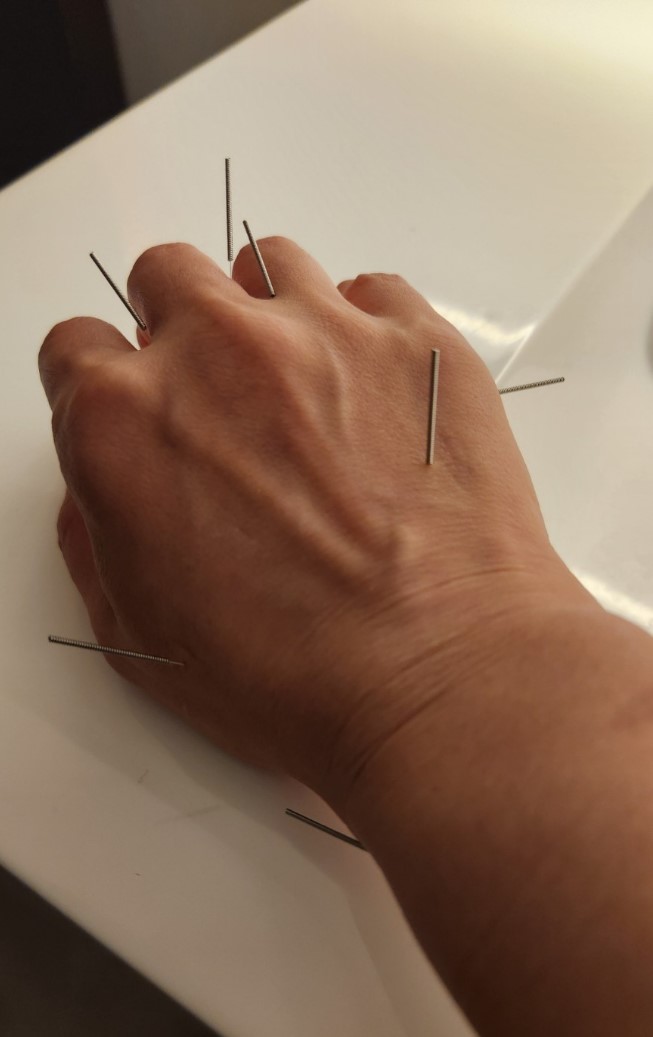
For local Ashi points, channel flow, pain modulation, and nervous system regulation
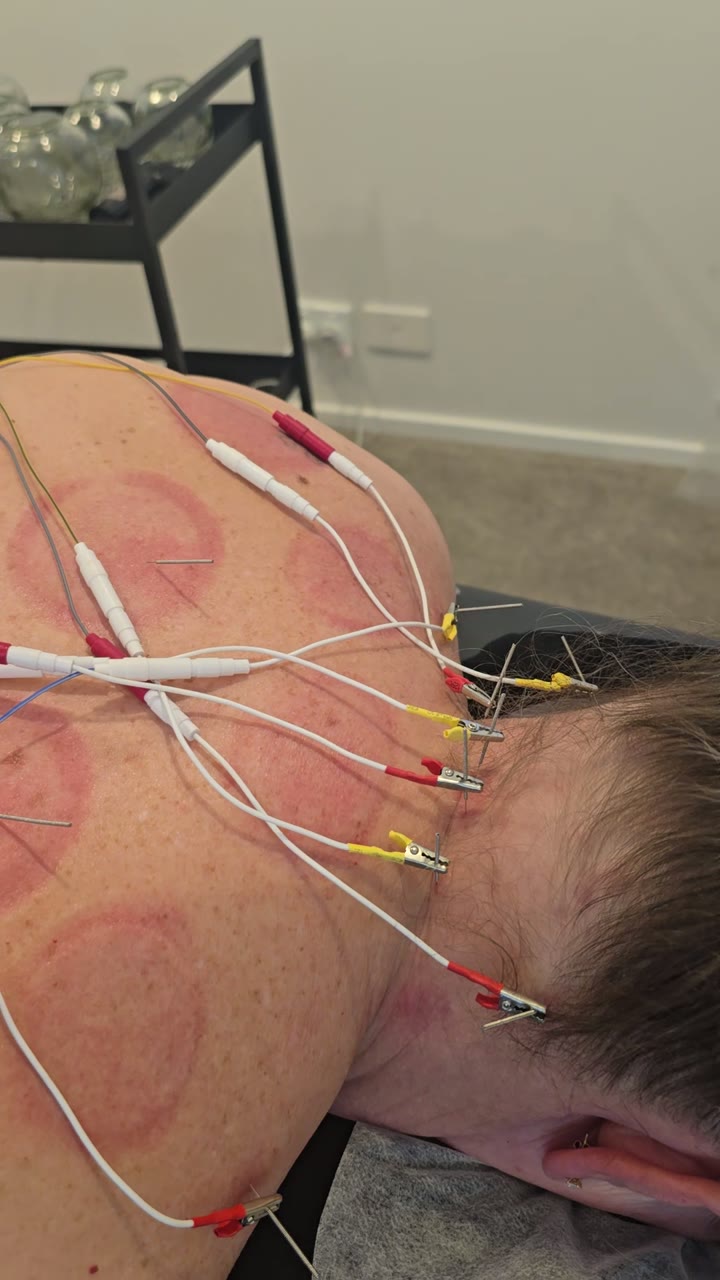
Small clips attach to the needles and deliver a gentle pulsing current, keeping the muscle engaged without you needing to move. Often combined with cupping in the same session for patterns that haven't responded to needles alone.
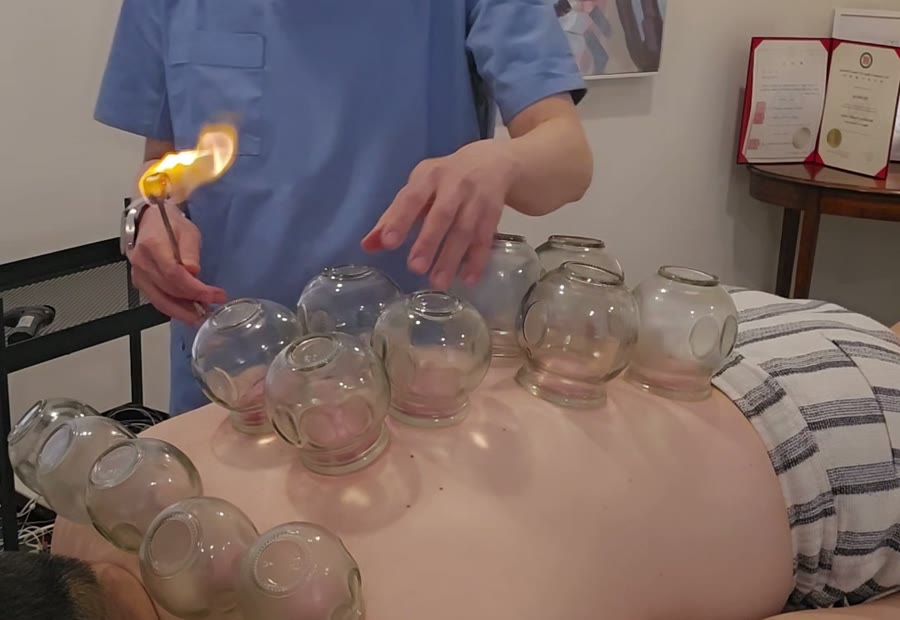
Warmed glass cups draw blood flow to the surface and release tight, guarded muscle. You'll feel a firm pulling sensation — most people find it relieving. Circular marks are common and usually fade within a few days to two weeks.
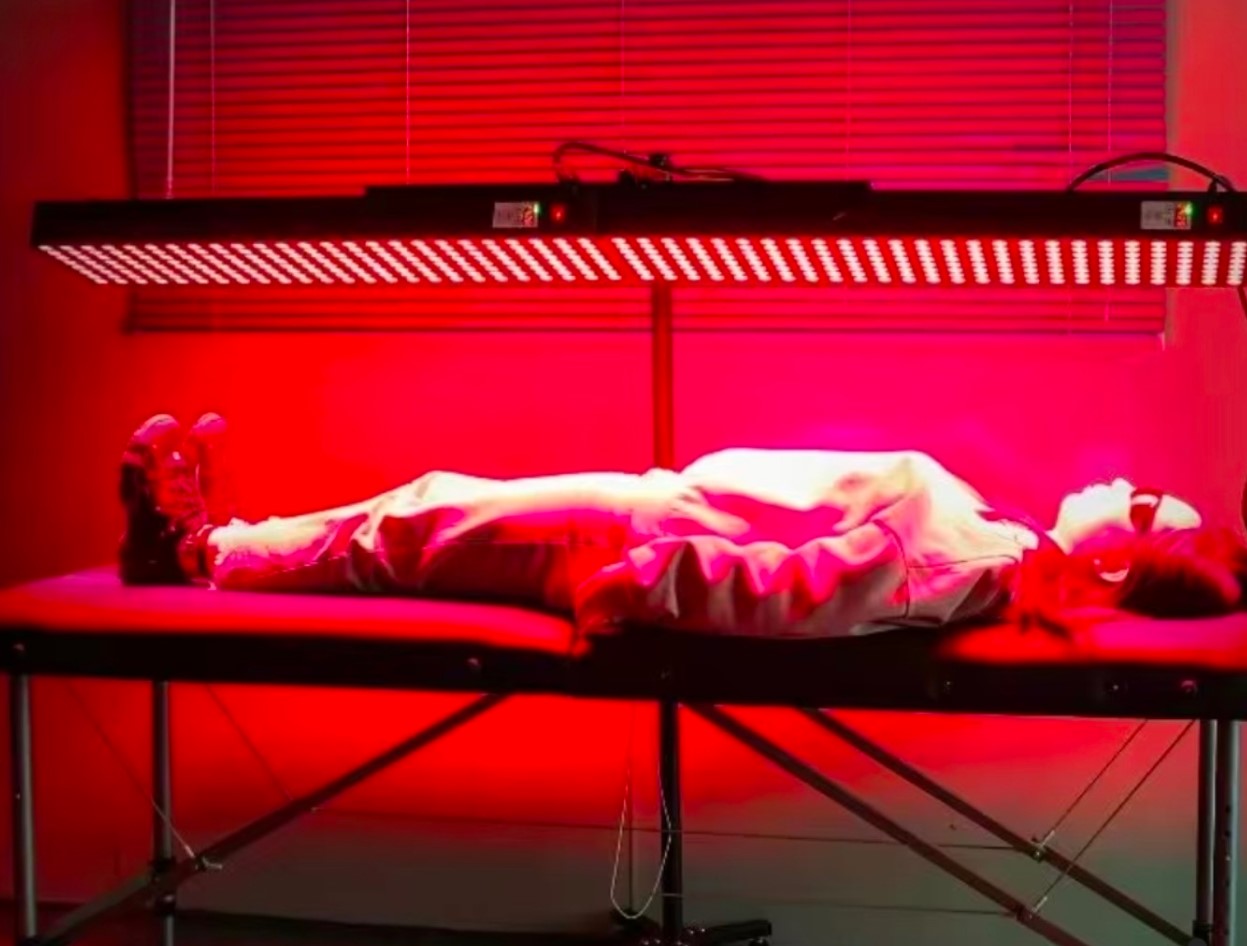
May support circulation, inflammation care, tissue repair, and recovery
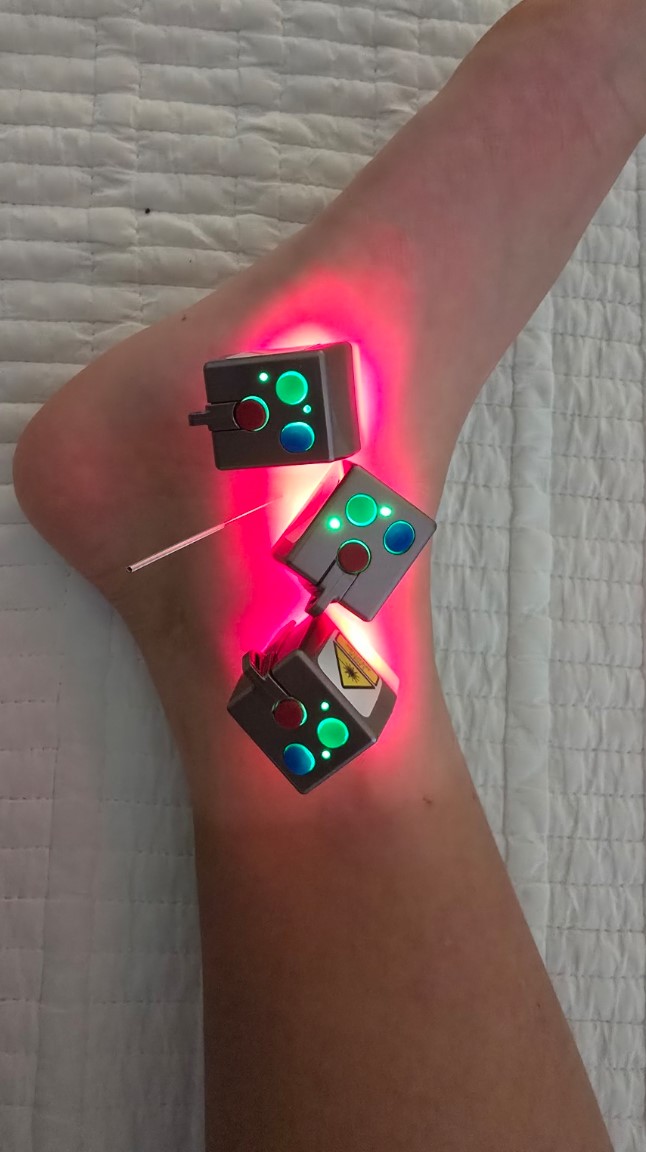
Needle-free support for sensitive areas or needle-sensitive patients
Treatment timeline
Some people notice changes within a few sessions, while long-standing or complex patterns usually need a steadier course of care.
Acute or recent symptoms may respond faster. Chronic, recurring, post-viral, hormonal, or deeply depleted patterns often need more time because the body is rebuilding capacity, not just quieting a symptom.
First visit
We start with a conversation — how the pain started, what makes it better or worse, and what you've already tried. We assess movement, tender points, and the channel pattern involved, then begin treatment in the same session if it's appropriate for you.
ACC pricing
RootCare is ACC-registered with no surcharge. If your injury qualifies, ACC covers your treatment costs from your first eligible visit.
Read more
For the deeper why behind this condition, you can read the related pattern guide.
Ready for the next step?
Book an in-person appointment to discuss your pain, treatment history and next steps.